In this lesson, I’ll share a smart way to leverage chords to create bluesy solos without fear of hitting wrong notes.
Creating a moving guitar solo of your own is incredibly rewarding. But half the battle is just avoiding the wrong notes. That’s where scales come in handy.
Unfortunately, many players sound like they’re practicing pentatonic scales when they solo.
Most of Us Practiced Scale Patterns Incessantly and Never Practiced Using Them
Many players learn how to play guitar this way:
They pick up a cool lick from a friend and ask, “how do you do that?” The answer is something like this:
“It’s just basic pentatonics.”
Or there’s an article in a guitar magazine that urges the importance of the major scale.
You take note and grab a book the size of an encyclopedia and start learning pattern after pattern.
Not once do you learn how to use the pattern to make music. It’s no wonder that so many of us struggle to break out of the boxes and actually use the fretboard to make music. Frustrating. I was stuck there for years.
But there is something you can do to reverse this and good news, all that time with the patterns won’t go to waste.
Here’s a plan to get started playing blues solos of your very own, step by step:
Step 1: Learn the Basics of the CAGED System
The CAGED system organizes the fretboard using 5 common chord shapes. Each letter in the word CAGED corresponds to a chord shape. For example, the C in CAGED refers to the basic C chord starting on the 3rd fret of the 5th string.
The system leverages these shapes by converting them to moveable shapes for easy use. Some are easier than others to play, but even the tough ones have workarounds.
Here’s an example:
Remember the basic C chord has its root on the 5th string.
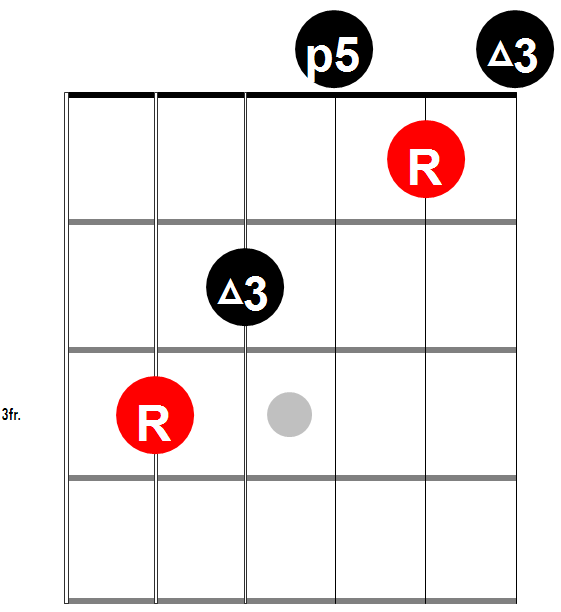
Convert that shape to a moveable shape by barring with your index finger, then forming the C chord with your remaining fingers.
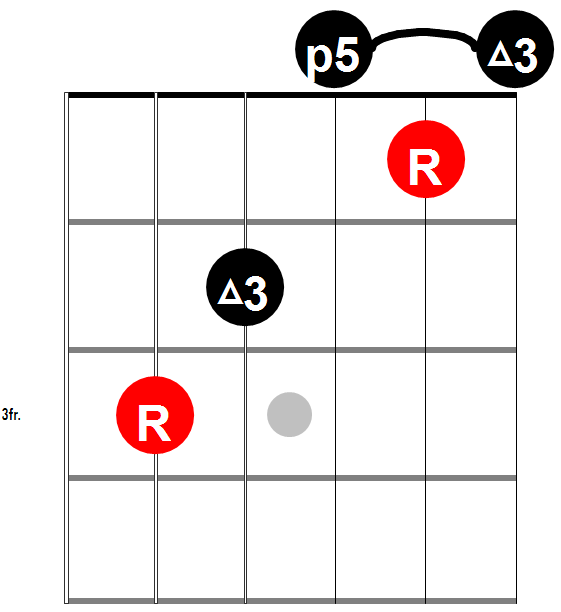
Then, hold this shape and move up the 5th string to the 7th fret, you now have an E chord.
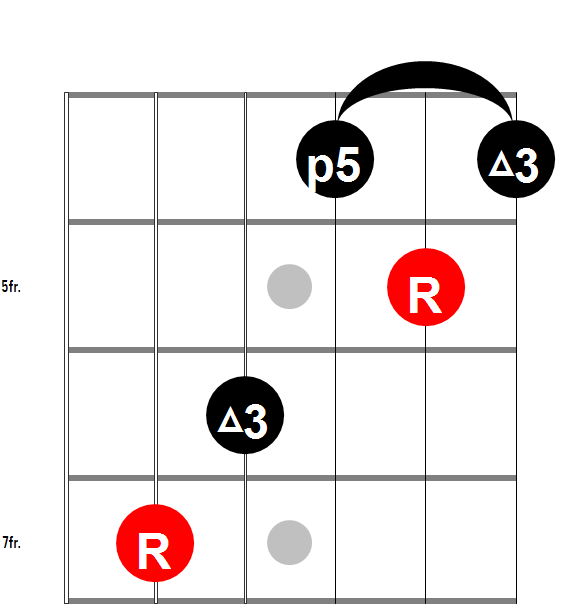
This is called a C-Shape, E Chord.
Step 2: Convert Each CAGED Shape into 7th Chords
The CAGED system is based on major chord shapes, but the Blues begs for the sound of dominant 7th chords.
We can add the minor 7th interval to each of the moveable chord shapes to get a moveable 7th chord.
For example, the moveable A shape contains a ring finger barre across strings 4, 3 and 2.
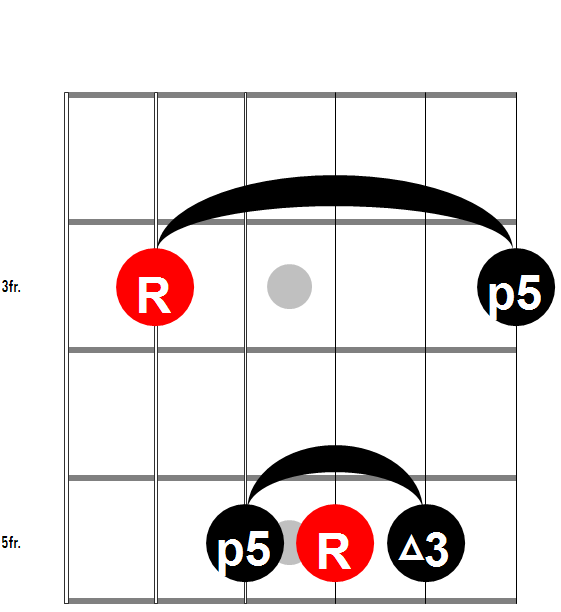
We can convert this into a moveable 7th chord with a few modifications.
Lift the ring finger barre and fret on strings 4 and 2. Make sure to barre the other strings with your index finger.
This shape allows the minor 7th interval on the 3rd string to be played with the index finger.
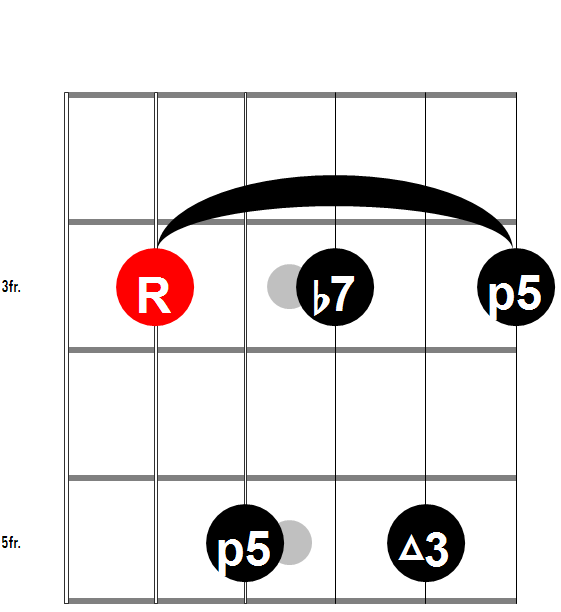
There is a 7th chord shape for each of the CAGED chords.
Step 3: Find Useable Alternatives for Tough CAGED7 Shapes
Many players encounter a tough CAGED chord shape and stop completely.
I can understand why.
For example, this is the moveable G shape from CAGED converts to this CAGED7 shape.
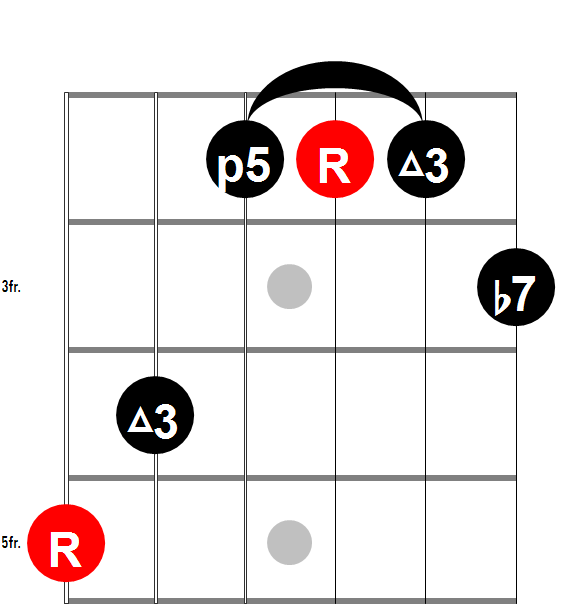
This is nearly impossible to play for most. But fortunately, there are workarounds!
Even if you don’t play the entire chord, you can still use parts of it. I never play this hand-cramp chord, but I frequently play this comfortable modification:
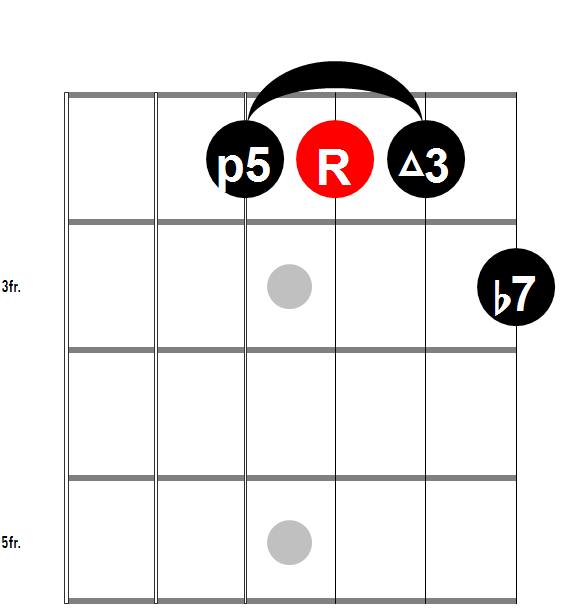
Don’t get stuck thinking that you have to play all the notes from the shape. That’s a path to ditching CAGED altogether and missing out on its many benefits.
Step 4: Superimpose the Minor Pentatonic Scale on Each Shape
This is where things get fun!
There are many ways to learn the minor pentatonic scale and each is useful. But attaching the scale to a 7th chord shape is particularly useful for blues players. Why? Because…
…we play 7th chords all the time.
…we play the minor pentatonic scale all the time.
Overlapping the two will instantly take your licks and solos to new levels.
Here’s how it works. Take any of the CAGED7 shapes and map the minor pentatonic scale around it starting from that root. For example, consider this minor pentatonic shape that surrounds the C7 chord shape.
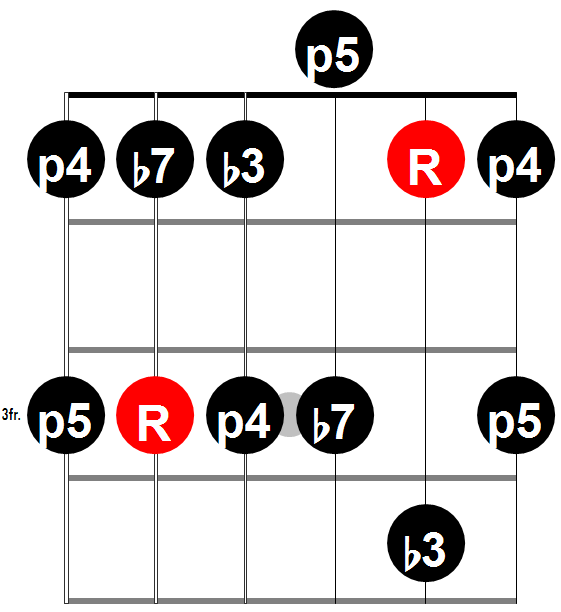
Now, see where the CAGED7 chord shape nests neatly into the pattern. These are great notes to use along with the minor pentatonic scale notes when improvising!
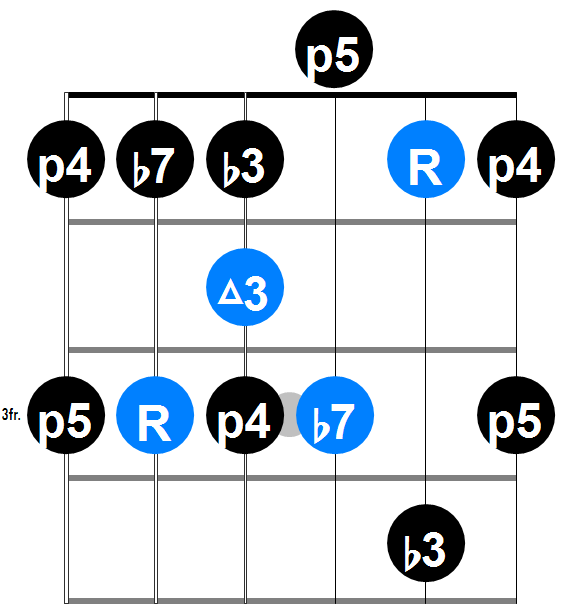
Then practice them together. Link these two things together in your mind. Strum the chord, then play the scale.
Remember the C7 shape is moveable. Move the shape and bring the pentatonic scale with it. You just learned how to play the minor pentatonic scale anywhere!
That’s without pouring over pages and pages of grids in a scale book!
Do this with each of the 5 CAGED7 chord shapes for the most flexibility.
Step 5: Create Simple Licks with the Minor Pentatonic Scale but Land on a Chord Tone
Now, we put this into action!
Hold down a CAGED7 chord shape and improvise a short phrase. Keep it super short. Two or three notes will do. You can move your fingers away from the chord shape, but visualize them. Keep your eyes on those notes.
Then slowly expand to incorporate a note from the minor pentatonic scale.
Here’s an example using the G7 shape, E7 chord.
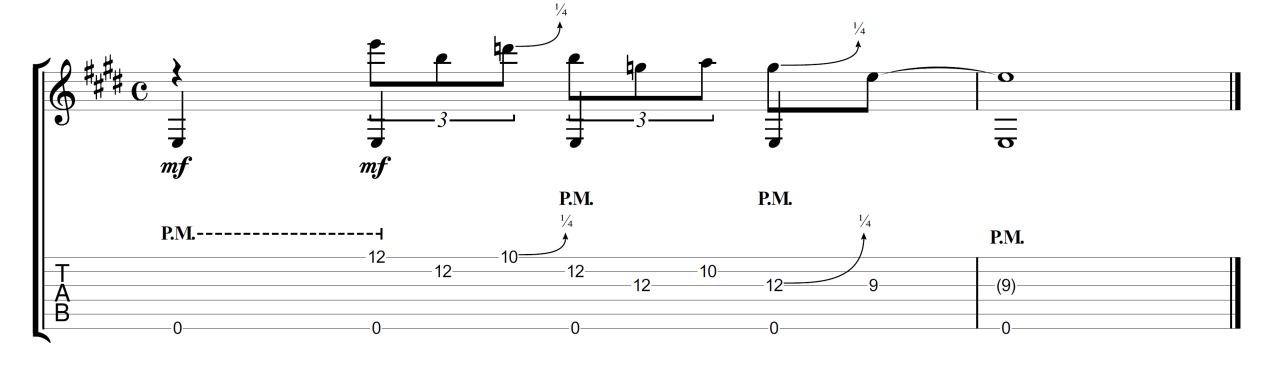
This lick comes out of the E7 Chord played from a G7 chord shape while incorporating notes from the surrounding minor pentatonic scale.
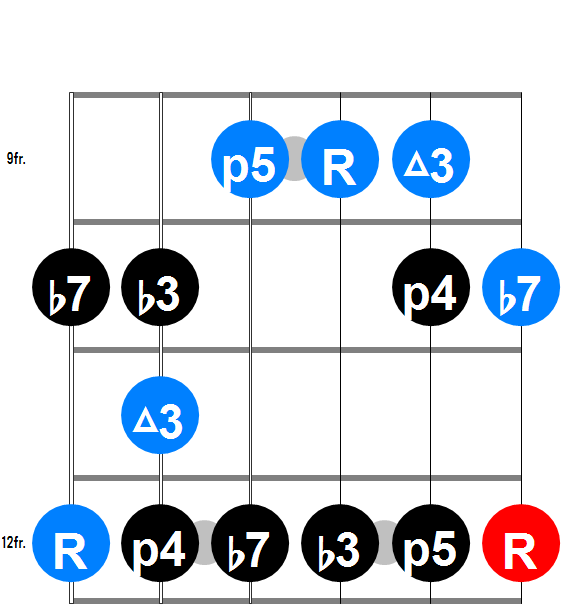
This system will keep you grounded on the fretboard. Yet you’ll have immediate access to bluesy pentatonic licks.
Take this further by expanding into longer licks and solos as you gain comfort with the shapes.
But remember to keep it simple at first and have fun!
Unlock the In-Depth Tutorial with Premium Membership