Are you stuck playing the same old blues shuffle patterns over and over again?
There’s nothing wrong with starting with the basic 12 bar blues shuffle rhythm pattern – I think you should. But at some point, you might find yourself feeling a little bored of the same old same old. If that’s you, this lesson will help you breathe new life into your blues rhythm parts with these three tips.
Tip 1: Don’t Play Every Beat
The first tip to help you leave shuffleland behind is to simply play less.
The blues shuffle riff teaches us to play eighth notes throughout the progression. Locking in and playing each 8th note in the pattern can sound great. But, after a chorus or two of that, you may want a little variation and a simple way to do that is to create space.
The obvious way to create space is to not play.
We often underestimate the power of silence. It helps give rhythmic variety to what you play. The not-so-obvious way to create space is to hold chords out. A ringing chord on top of the groove creates a bit of breathing room. Try playing a chord and combining these two ways of creating space.
Tip: Break away from the constant stream of eighth notes and play some chords short and some long.
Example: Here’s a rhythm with both short and long chord stabs:
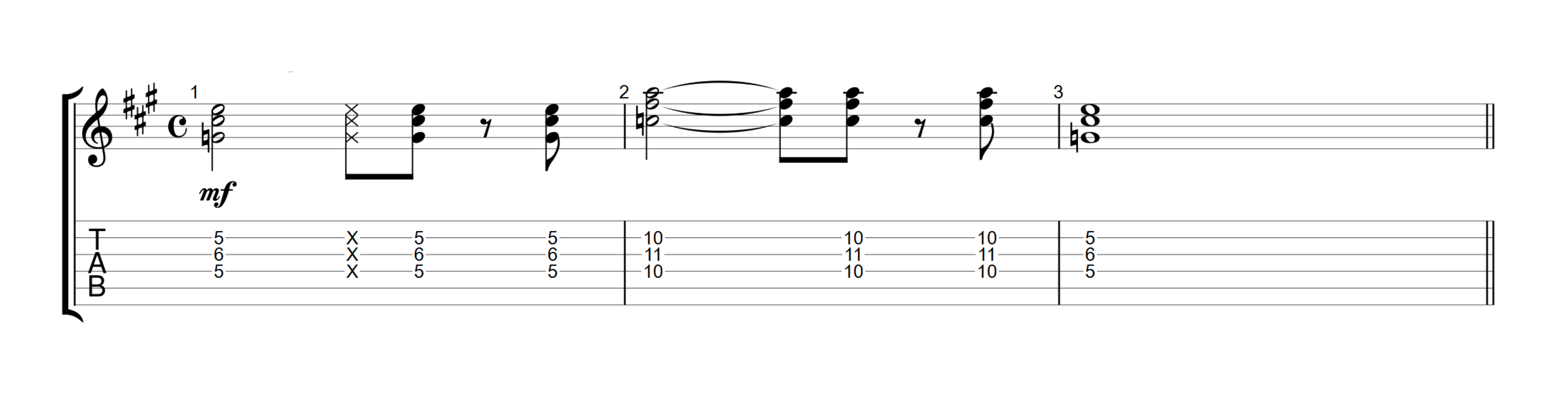
Notice how the space between the chords creates a sense of tension and release.
The space adds interest to the rhythm. Check. But now we need to add a little life to what’s happening on the fretboard which brings me to the second tip.
Tip 2: Mix Chord Shapes
Imagine yourself playing the A7 barre chord rooted on the 6th string, 5th fret.
When the progression changes to the D7 chord, you have a few options. You could keep that same barre chord shape and move it along the 6th string to the 10th fret. That’s a D note so you’ll have a fine choice for a D7. But interesting things happen when we choose the D7 shape that’s nearby.
Here’s an Example:
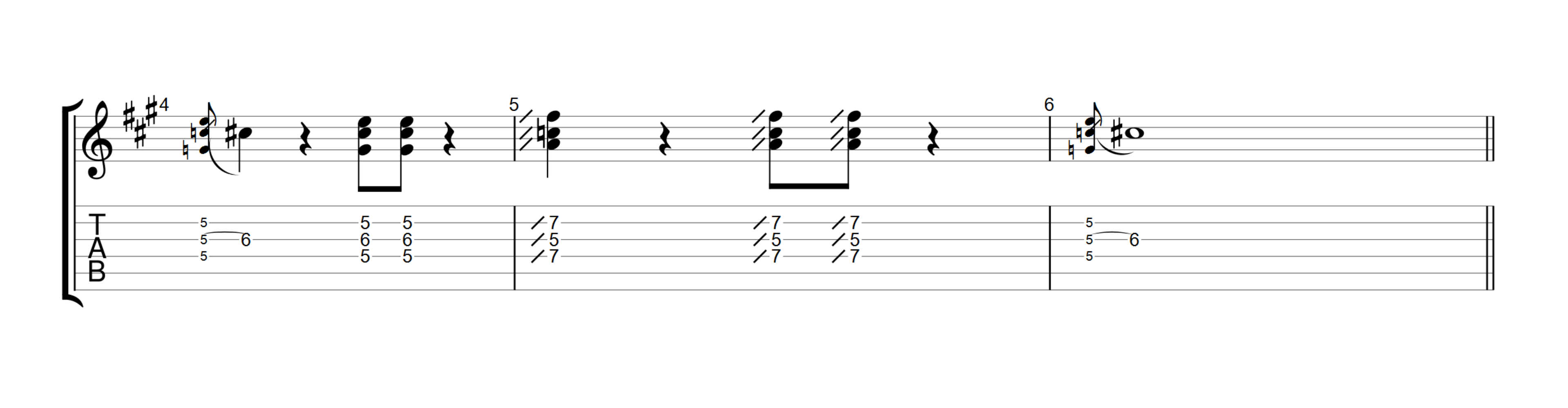
Notice how the C# of the A7 drops down a half-step to the C when the chords change from A7 to D7. This half-step movement sounds real nice. It gets lost when you simply move the shape from the 5th fret to the 10th.
Quick Tip: Use the CAGED system to find alternate shapes for each chord in the progression.
Mix Voicings of a Single Chord
Expand this idea by using more than one shape for each chord. This adds even more harmonic interest.
Example: Start with two or three voicings for each chord and switch between them within a bar like this.
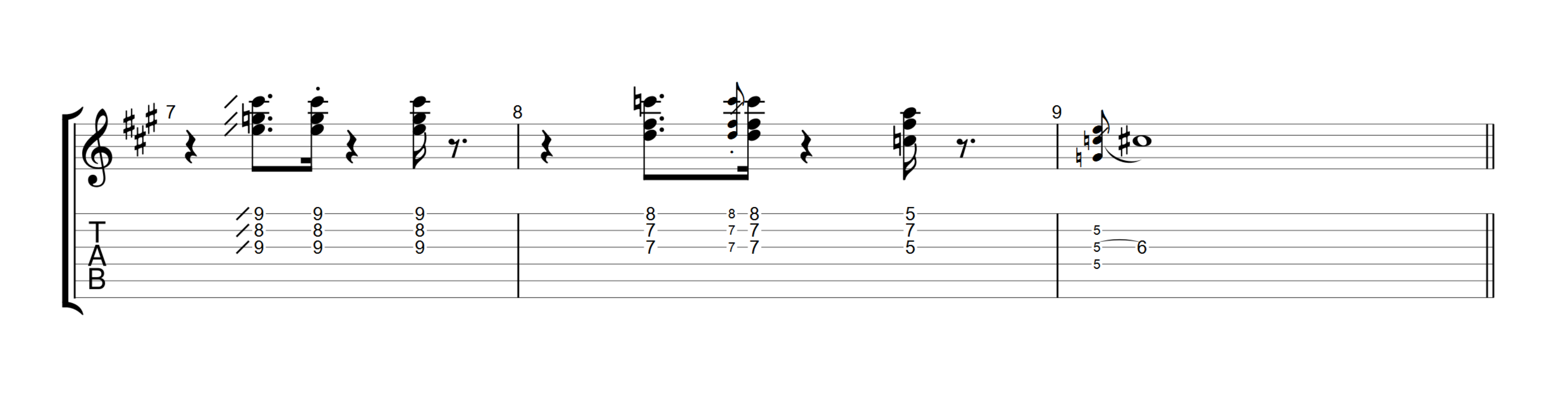
The possibilities are endless when you start mixing and matching voicings! This is where comping chords starts to feel a lot like improvising.
Tip 3: Use Syncopation
Finally, take your rhythm chops to the next level with syncopation.
Syncopation is all about accenting or stressing unexpected beats in the bar. This creates a sense of tension and release rhythmically and helps you add a little funk to your blues.
Here’s a syncopated rhythm playing only on the &’s of each beat:
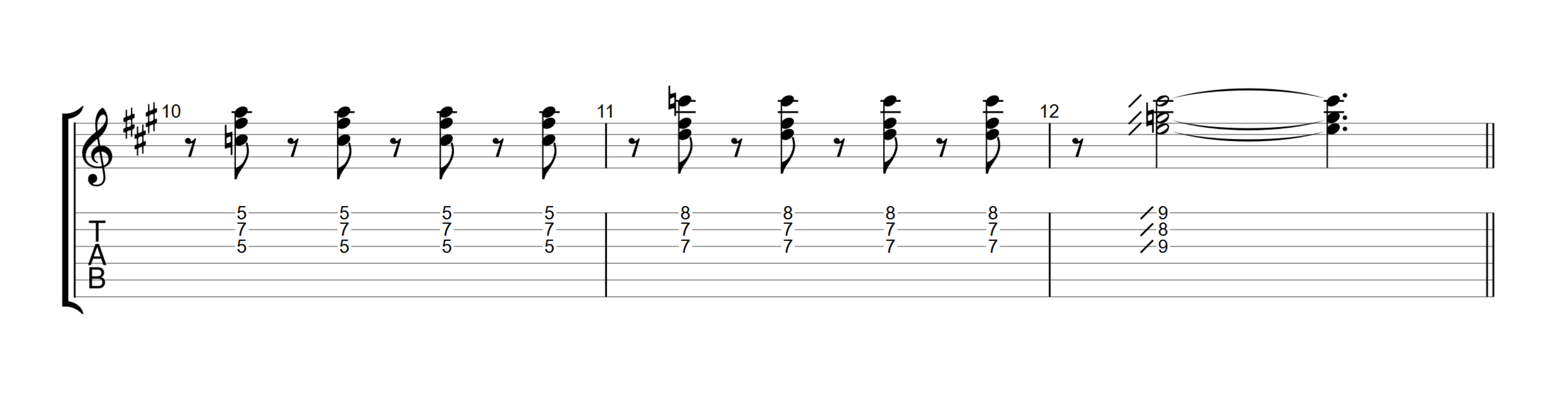
If you find syncopation challenging, try this.
Think of basic strumming patterns, where downstrokes fall on the main beats (1, 2, 3, 4) and upstrokes fall on the “and” counts. Apply this concept to your chord stabs, accenting the upstrokes.
Summary: Break Free of the Shuffle
By introducing space, mixing chord voicings and adding syncopation, you’ll be well on your way to breaking free from shuffle blues ruts. Remember, the key is to:
- Embrace space and silence in your rhythms.
- Mix and match chord shapes and use multiple voicings for each chord.
- Incorporate syncopation for rhythmic interest.
With these techniques under your belt, you’ll be able to inject new life and excitement into your blues jams, keeping your playing fresh and engaging.
So, pick up your guitar and start exploring these concepts today!